


Conflict Resolution through Role-Playing
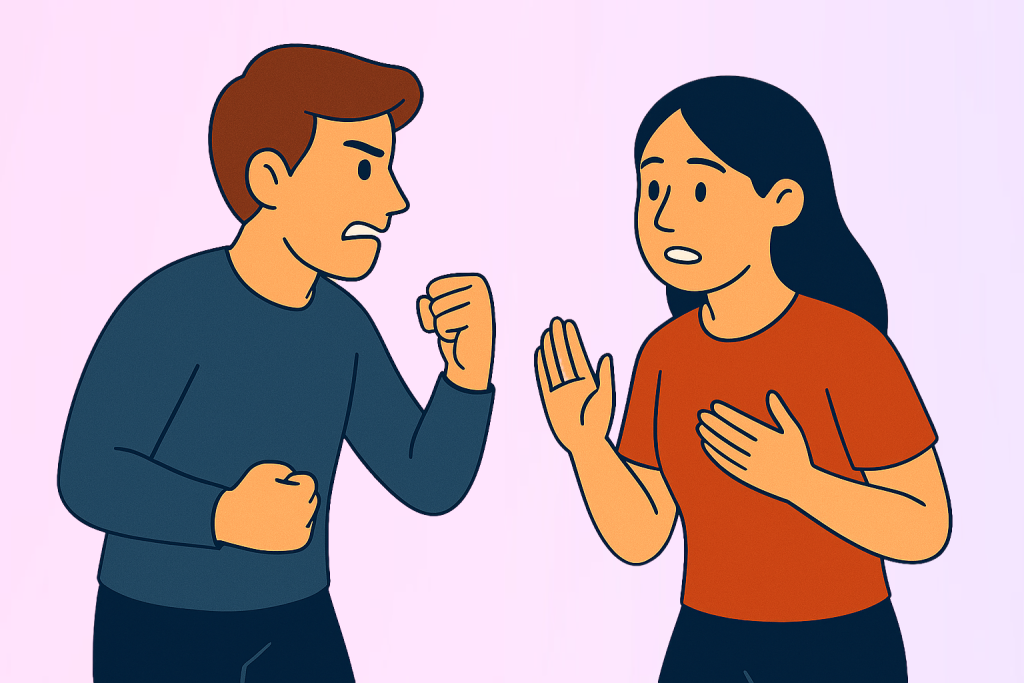
Purpose: To provide a safe and interactive environment where young people can explore, understand, and practice constructive ways of managing conflicts. Through experiential learning and drama-based methods, participants gain insight into different perspectives and develop practical communication and problem-solving skills.
Issue addressed: Peer conflicts (misunderstandings, exclusion, bullying), ineffective communication, emotional mismanagement (anger, frustration), lack of empathy, escalation of everyday conflicts, need for non-violent conflict resolution strategies
Relevance to mental health: Enhances emotional awareness, supports emotional expression, strengthens empathy, reduces stress from unresolved conflicts, promotes healthy communication, encourages self-reflection, supports emotional regulation, builds group cohesion and sense of belonging, increases resilience in social situations
Intended change: Improved recognition of conflict situations, use of constructive conflict resolution strategies, better communication and active listening skills, increased empathy, more effective emotional regulation, higher confidence in handling conflicts, reduction of aggressive or avoidant behaviours, stronger cooperation and respectful interactions.
Context of pilot implementation
This activity was implemented as part of a pilot session with a small group of 6 young people with mixed abilities, including participants with different disabilities. The session was adapted to their needs, with simple instructions and a supportive environment to help everyone participate. A sign language interpreter was also present to support a hearing-impaired participant. The activities were facilitated.
Theoretical background
Role-playing is a learning method that helps young people understand real-life conflict situations by acting them out in a safe environment. Conflicts are a natural part of everyday life, but many young people do not yet have the skills to manage them effectively. They may react with avoidance, frustration, or aggression. This tool allows participants to explore different perspectives, develop empathy, and practice constructive communication and problem-solving through experience.
Target group
- Age: 10 + years (also adaptable for adults)
- Profile: students, NEET young people, youth from vulnerable backgrounds, diverse groups (urban/rural, minorities), people with disabilities
- Context: Workshops and group activities focusing on conflict resolution and communication.
Context of use
Location: School classrooms, NGO programs, youth centres, community spaces, group workshops.
Types of skills and dimensions addressed:
- Socio-emotional skills: developing empathy, understanding others’ feelings, recognizing emotions in different situations
- Relational skills: practicing communication, active listening, expressing thoughts and feelings respectfully, reducing misunderstandings
- Self-regulation skills: managing emotions in challenging situations, controlling reactions, tolerating discomfort during social interactions
- Awareness skills: recognizing one’s own behaviour in social situations, understanding different perspectives, improving flexibility in thinking and decision making.
Activity description – step by step
Step 1: Introduction
Duration: 5 minutes
Procedure: The facilitator introduces the topic of stressful everyday situations and asks participants to share short examples. The aim of the session is to explore reactions and practice more effective ways of communication.
Table 1. Actions – Step 1.
| Facilitator’s Actions | Participants’ Actions |
|---|---|
| Introduce the topic of everyday stressful situations. | Listen to the introduction. |
| Ask participants to think of situations where they felt stressed or uncomfortable. | Engage with the topic and prepare for the activities. |
| Invite a few participants to share short examples. | |
| Explain the goal of the session: to explore reactions and practise better ways of communication. |
Reflection: This step helps participants become aware of stressful situations in their daily life and recognise that such experiences are common. By sharing examples, they realise that others face similar challenges. It also prepares them for active participation and creates a safe space for exploring emotions, reactions and communication strategies during the session.
Step 2: Role-play - Stressful situations
Duration: 20 minutes
Procedure: Participants work in small groups and act out real-life situations (e.g. job interview, public office, workplace conflict, public transport, doctor’s visit). They explore how people react under stress and experiment with different responses. After each role-play, short group reflections focus on emotions and behaviours.
Table 2. Actions – Step 2.
| Facilitator’s Actions | Participants’ Actions |
|---|---|
Explains the task and assigns or supports choosing situations | Work in small groups to prepare and act out situations |
Observes role-plays and ensures a safe atmosphere | Take on different roles and explore reactions to stress |
| Guides short reflections after each role-play with simple questions (e.g. How did you feel? What worked? What could be different?) | Experiment with different ways of responding |
| Share thoughts and feelings during reflection. |
Reflection: Participants reflect on how they felt in the situations, how they reacted, and what alternative responses could be used.
Step 3: Assertive communication practice
Duration: 20 minutes
Procedure: The facilitator introduces assertive communication and explains the difference between passive, aggressive and assertive styles. Participants practice saying “no,” making requests and using assertive body language. A simple four-step model (fact-feeling-effect-request) is introduced and applied in short exercises.
Table 3. Actions – Step 3.
| Facilitator’s Actions | Participants’ Actions |
|---|---|
Explains assertive communication and the difference between passive, aggressive and assertive styles | Practice saying “no” and making requests |
Shows simple examples, and guides the exercises | Try different communication styles, use body language. |
| Introduces the four-step model (fact-feeling-effect-request) |
Reflection: They reflect on how it felt to communicate assertively, what was easy or difficult, and how they can use these skills in real life situations.
Step 4: Actions - Step 4.
Duration: 10 – 15 minutes
Procedure: Participants reflect on personal limits using a guided activity (e.g. what they accept, refuse or tolerate). They practice expressing boundaries and responding to uncomfortable situations in a respectful way.
Table 4. Actions – Step 4.
| Facilitator’s Actions | Participants’ Actions |
|---|---|
Explains the activity and gives simple examples | Think about what they accept, refuse, or tolerate |
Supports participants while they think about their own boundaries | Practice saying their boundaries in different situations. |
| Helps if someone gets stuck. |
Reflection: Participants reflect on how easy or difficult it was to set boundaries and how they felt while doing it.
Step 5: Reflection and closing
Duration: 5 minutes
Procedure: Participants reflect on what they learned and connect it to their own experiences.
The facilitator highlights key ideas such as awareness, courage and personal choice.
Table 5. Actions – Step 5.
| Facilitator’s Actions | Participants’ Actions |
|---|---|
Leads a short closing discussion | Share what they learned and connect it to their own experiences. |
| Highlights key ideas like awareness, courage, and personal choice. |
Required Materials: paper, pens, printed scenarios (optional)
Possible Adaptations:
The activity can be adapted by using simpler situations, giving more time for preparation, and allowing participants to choose their level of involvement. Smaller groups or pairs can be used if needed. Facilitators can provide more guidance, and participants can observe instead of acting if they feel uncomfortable.
Impact Evaluation of the Activity
| Indicator | Evaluation method |
|---|---|
Understanding of stressful situations | Observation during role-plays and reflection |
Use of assertive communication | Group activities and sharing |
Ability to express boundaries | Short verbal feedbacks. |
| Participant engagement. |
Trainer's reflection
- Level of group engagement: It was high. Participants were active throughout the session, especially during role-plays and practical exercises
- Atmosphere: Supportive and open as much as possible to help for them to feel safer to express themselves and gradually became more confident during the activities.
- Range of emotional reactions: Participants showed a variety of emotional responses, including uncertainty, frustration and confidence. With time, they became more comfortable and open in sharing their thoughts and experiences.
Reactions observed during the pilot activity
Participants were open and engaged, especially during the role-plays. Some were unsure at the beginning, but became more confident as the session went on. They showed different emotions like frustration and uncertainty, but also confidence, and were willing to share their thoughts by the end.
Risks and warnings
- Some situations may be emotionally challenging for participants, especially when they relate to personal experiences.
- Participants with different abilities may need additional support and adapted communication. It is important to create a safe, respectful environment and not force anyone to participate actively.